
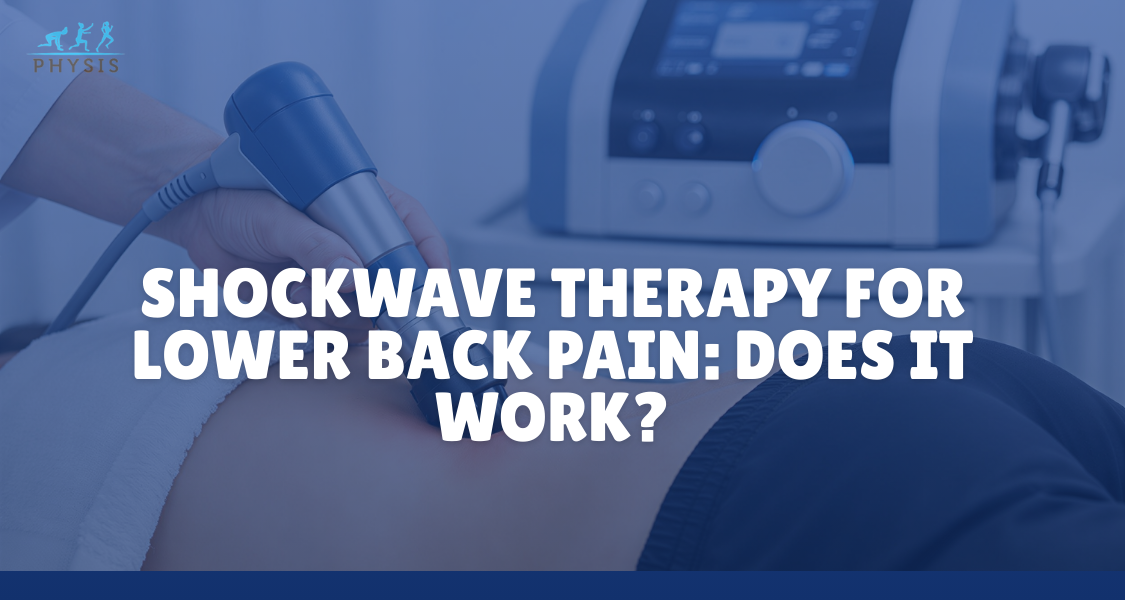
Shockwave Therapy for Lower Back Pain: Does It Work?
Shockwave therapy (ESWT) uses high-energy acoustic waves to reduce pain and stimulate tissue healing. For chronic lower back pain, the research is strong. Multiple meta-analyses covering thousands of patients show meaningful improvements in pain and function, with results that hold up at 3-month follow-up. It works best for chronic cases and delivers the strongest outcomes when paired with physical therapy. If you’ve tried other treatments without lasting relief, call Physis Physical Therapy to find out if you’re a candidate.
Lower back pain affects more people than any other musculoskeletal condition on the planet. According to the Global Burden of Disease Study 2021, it impacts 619 million people worldwide, and that number is projected to climb to 843 million by 2050. In the US alone, the cost of managing lower back and neck pain reached $134 billion in a single year.
If you’ve been living with lower back pain, you know that the standard options, pills, injections, surgery, don’t always deliver the lasting relief you’re looking for. That’s why more and more patients and clinicians are turning to shockwave therapy for lower back pain as a non-invasive alternative with a real evidence base.
At Physis Physical Therapy, we use STORZ Medical’s clinical-grade shockwave device right here in Midtown NYC. In this post, we’ll break down exactly what shockwave therapy is, how it works, what the research says, and whether it might be right for you.
What Is Shockwave Therapy for Lower Back Pain?
Shockwave therapy (also called ESWT, or extracorporeal shockwave therapy) is a non-invasive treatment that delivers high-energy acoustic waves into soft tissues to reduce pain and kick-start the body’s own healing process. Sessions typically last 15 to 20 minutes, require no anesthesia, and involve no incisions or downtime.
The device is placed against the skin over the painful area. A coupling gel is applied first so the sound waves transfer efficiently into the tissue. The waves penetrate the skin and target the deeper soft tissue structures, including muscles, tendons, fascia, and ligaments, in the lower back region.
There are two main types of shockwave devices. Radial ESWT spreads energy across a broader area and is typically used for superficial soft tissue conditions. Focused ESWT concentrates energy at a precise depth and is better suited for deeper structures. At Physis Physical Therapy, our shockwave therapy in Midtown NYC uses STORZ Medical technology, which is one of the most respected clinical devices in the field.
How Does Shockwave Therapy Actually Relieve Pain?
Shockwave therapy relieves pain through several overlapping biological mechanisms. It reduces levels of substance P (a neurotransmitter that carries pain signals), stimulates the growth of new blood vessels, and triggers collagen synthesis in damaged soft tissue. Together, these processes reduce pain while helping the tissue actually repair, not just mask the discomfort.
Here’s what’s happening under the surface:
Substance P depletion. Substance P is a neuropeptide that transmits chronic pain signals through C-fibers to your central nervous system. Research shows that shockwave waves reduce substance P levels in the treated area, which disrupts the pain signal and produces lasting relief rather than temporary numbness.
Neovascularization. Chronic pain is often tied to poor circulation in damaged tissue. According to published research on ESWT mechanisms, shockwaves trigger the release of vascular endothelial growth factor (VEGF), which stimulates the formation of new blood vessels. Better circulation means more oxygen and nutrients reaching the tissue, which is essential for real healing.
Collagen remodeling. Collagen is the structural protein that holds your tendons, ligaments, and fascia together. Shockwaves stimulate fibroblasts (the cells that produce collagen) to rebuild damaged tissue with stronger, more organized fibers. As clinical research confirms, this is one reason the benefits of shockwave therapy often continue to grow for weeks after a session ends.
Gate-control disruption. The intense mechanical input from the acoustic waves can override and temporarily reset pain signaling pathways, producing immediate relief even before the longer-term tissue changes kick in.
This is not a painkiller. It’s a biological reset that helps your body do what it was designed to do: heal.
What Does the Research Say About Shockwave Therapy for Lower Back Pain?
For chronic lower back pain, the evidence for shockwave therapy is strong and consistent across multiple high-quality meta-analyses. The research shows meaningful reductions in pain intensity and improved physical function, with a safety profile that compares favorably to injections and surgery. Evidence is weaker for acute (short-term) lower back pain, where the body often recovers on its own.
Here’s what the most current data shows:
The 2023 Liu et al. meta-analysis published in the Journal of Orthopaedic Surgery and Research pooled 12 randomized controlled trials involving 632 patients with chronic lower back pain. ESWT significantly reduced pain scores (VAS) at both week 4 and week 12 compared to control groups, with no serious adverse effects reported in any of the included trials.
The 2023 Medicine meta-analysis, covering 22 studies and 1,749 patients, found that ESWT produced lower pain scores (VAS mean difference of -1.14), lower disability scores (ODI mean difference of -6.01), and improved physical function compared to other therapies, with the long-term data at 3 months also favoring shockwave treatment.
The 2024 Ferdinandov systematic review in Frontiers in Medicine focused specifically on focused ESWT for lower back pain and found significantly greater improvement in pain scores immediately after treatment and at 1-month follow-up compared to sham procedures.
An important nuance: a 2021 randomized controlled trial found that radial ESWT added to standard care for acute lower back pain did not outperform the control group. This suggests shockwave therapy works best for chronic cases, where the tissue has been stuck in a dysfunctional state and needs a biological stimulus to break the cycle.
The bottom line: if your lower back pain has been going on for 12 weeks or more, the evidence strongly supports trying shockwave therapy as part of your care plan.
Who Is a Good Candidate for Shockwave Therapy?
Shockwave therapy works best for patients with chronic lower back pain (lasting 12 weeks or more) that has a soft tissue component, such as myofascial pain, trigger points, sacroiliac joint dysfunction, or pain involving the paraspinal muscles, tendons, and ligaments. It’s a strong option for people who’ve tried other conservative treatments without adequate relief and want to avoid injections or surgery.
You may be a good fit if you have:
- Chronic non-specific lower back pain (mechanical or myofascial origin)
- Sacroiliac joint dysfunction, which research has specifically studied in the context of ESWT
- Trigger points or muscle tightness in the paraspinal and gluteal muscles
- Lower back pain associated with disc-related changes or postural dysfunction
- A history of pain that returns after injections or medications wear off
Shockwave therapy is not appropriate if you have:
- A pacemaker or other implanted cardiac device
- Active infection or open wounds in the treatment area
- Known malignancy (cancer) in the target tissue
- Pregnancy
- Uncontrolled bleeding disorders or blood-thinning medications (in some cases)
A proper clinical evaluation is essential before starting treatment. At Physis Physical Therapy, every patient goes through a thorough assessment before we recommend any intervention. Our goal is always to match the treatment to the specific cause of your pain, not to apply a one-size-fits-all approach.
At Physis Physical Therapy: What to Expect During and After Treatment
At Physis Physical Therapy, your shockwave therapy experience is built around precision, not speed. Here’s what a typical course of treatment looks like.
Before your first session, you’ll have a comprehensive evaluation. We assess your movement patterns, identify the specific structures contributing to your pain, and determine whether shockwave therapy is the right tool for your situation.
During each session, the treating clinician applies coupling gel to the skin and positions the STORZ Medical handpiece over the target area. You’ll feel rhythmic pressure pulses. Some patients find it mildly uncomfortable around active trigger points, but the sensation is manageable and typically fades within seconds of the device moving to a new location. Each session lasts roughly 15 to 20 minutes.
The typical treatment course for lower back pain is 3 to 6 sessions, usually spaced 5 to 7 days apart. Some patients notice a reduction in pain after the first or second session. Others see more gradual improvement that builds over the full course of treatment and continues for weeks afterward as the biological healing processes unfold.
After each session, you should avoid anti-inflammatory medications (NSAIDs like ibuprofen or naproxen) for at least 48 hours. This is important: shockwave therapy works partly by triggering a controlled inflammatory response that kicks off tissue repair. Blocking that inflammation with NSAIDs during the critical window undermines the treatment. Ice and rest are also generally not recommended immediately after.
Mild soreness in the treated area for 24 to 48 hours is normal. Most patients can continue their normal activities right away.
Shockwave Therapy vs. Other Lower Back Pain Treatments
Shockwave therapy doesn’t replace all other treatments, but it fills a gap that many standard options don’t address: it targets the tissue-level dysfunction that causes chronic pain to persist, without the risks of injections or surgery.
Here’s how it compares:
Corticosteroid injections can reduce inflammation quickly, but the relief is often temporary and repeated injections carry risks of tissue weakening. Shockwave therapy offers a longer-lasting effect by addressing the structural cause rather than suppressing the inflammatory response.
Surgery is appropriate for specific structural problems (herniated discs with nerve compression, for example), but the majority of chronic lower back pain cases don’t have a surgical solution. Shockwave therapy is a strong option for the large category of chronic mechanical and soft tissue pain that surgery won’t fix.
Oral medications (NSAIDs, muscle relaxants, opioids) manage symptoms without addressing the underlying tissue dysfunction. They’re often part of an acute pain plan, but don’t produce lasting structural change.
Standard physical therapy is foundational and important. But sometimes the tissue is so chronically dysfunctional, with restricted blood flow, disorganized collagen, and entrenched pain signaling, that manual work and exercise alone don’t produce the breakthrough a patient needs. That’s where shockwave therapy can serve as a catalyst.
Our physical therapy services at Physis are designed to work in concert with shockwave therapy, not instead of it.
At Physis Physical Therapy: How We Combine Shockwave Therapy with Physical Therapy for Better Results
At Physis Physical Therapy, we don’t treat shockwave therapy as a standalone procedure. We integrate it into a comprehensive care plan that addresses why your lower back pain developed in the first place.
Combining ESWT with targeted physical therapy produces stronger and longer-lasting results than either approach alone. Research on ESWT for chronic lower back pain consistently shows that patients receiving shockwave therapy alongside active rehabilitation achieve better improvements in both pain and function at 1-month and 3-month follow-up compared to those receiving either treatment in isolation.
Here’s why the combination works so well. Shockwave therapy creates the biological conditions for healing: new blood vessels, freshly synthesized collagen, and a reset of the pain signaling system. Physical therapy then builds on that foundation by correcting the movement patterns, muscle imbalances, and spinal alignment issues that created the problem. Without addressing those root causes, even the best tissue-level intervention is temporary.
At Physis, our approach to lower back physical therapy draws on multiple clinical disciplines, including Dynamic Neuromuscular Stabilization, the Janda approach, the McKenzie Method, and more. We use shockwave therapy to open the door, then we walk you through it.
If you want to understand more about managing lower back pain between sessions, our free lower back pain guide is a great place to start.
Conclusion
Shockwave therapy for lower back pain is not a trend. It’s a clinically supported, non-invasive treatment that addresses chronic pain at the tissue level, with a growing body of evidence behind it.
Here’s what you need to know:
- ESWT significantly reduces pain and improves function in chronic lower back pain, with effects that hold up at 3-month follow-up across multiple large meta-analyses.
- It works through real biological mechanisms, including reducing pain neurotransmitters, stimulating new blood vessel growth, and rebuilding collagen.
- It’s most effective when combined with physical therapy that addresses the root causes of your pain.
If you’ve been managing lower back pain for months or years and you’re ready for a different approach, we’re here to help. At Physis Physical Therapy in Midtown NYC, we’ll evaluate your case thoroughly and build a plan that’s designed specifically for you.
Call us today to schedule your appointment. NYC: 212-706-7480
Frequently Asked Questions
Most patients describe the sensation as rhythmic pressure, similar to a deep tissue massage, with mild discomfort around active trigger points. The intensity is adjustable, and your clinician will work within your tolerance. Any soreness afterward typically resolves within 24 to 48 hours. Most people find the treatment very manageable, and discomfort tends to decrease with each successive session.
Most patients with chronic lower back pain complete 3 to 6 sessions, spaced approximately one week apart. Research trials typically assess outcomes at 4 and 12 weeks, with meaningful improvements appearing at both time points. The exact number of sessions depends on the severity of your condition, how long you’ve had pain, and how your body responds to treatment. Your clinician will reassess after each session.
Yes. None of the 12 randomized controlled trials included in the 2023 Liu et al. meta-analysis recorded serious adverse events related to ESWT. Mild redness, temporary soreness, and minor bruising at the treatment site are the most commonly reported side effects. Shockwave therapy should not be applied over the spine directly or in the presence of contraindications such as a pacemaker, active infection, or malignancy in the area.
For most patients with chronic mechanical or soft tissue lower back pain, shockwave therapy is a strong non-surgical option worth exploring before considering surgery. It won’t replace surgery for structural problems that require it, such as significant nerve compression from a herniated disc. But for the large portion of patients whose chronic lower back pain is driven by soft tissue dysfunction, it offers meaningful relief without surgical risk. A thorough evaluation will help determine which category you’re in.
Some patients notice a reduction in pain after the first or second session. For others, improvement builds gradually over the full course of treatment and continues for weeks afterward as the tissue remodels and strengthens. The 2024 Frontiers in Medicine review found significant improvements immediately after treatment and at 1-month follow-up in focused ESWT groups. Longer-term tissue changes from collagen remodeling can continue for 8 to 12 weeks after your last session.