
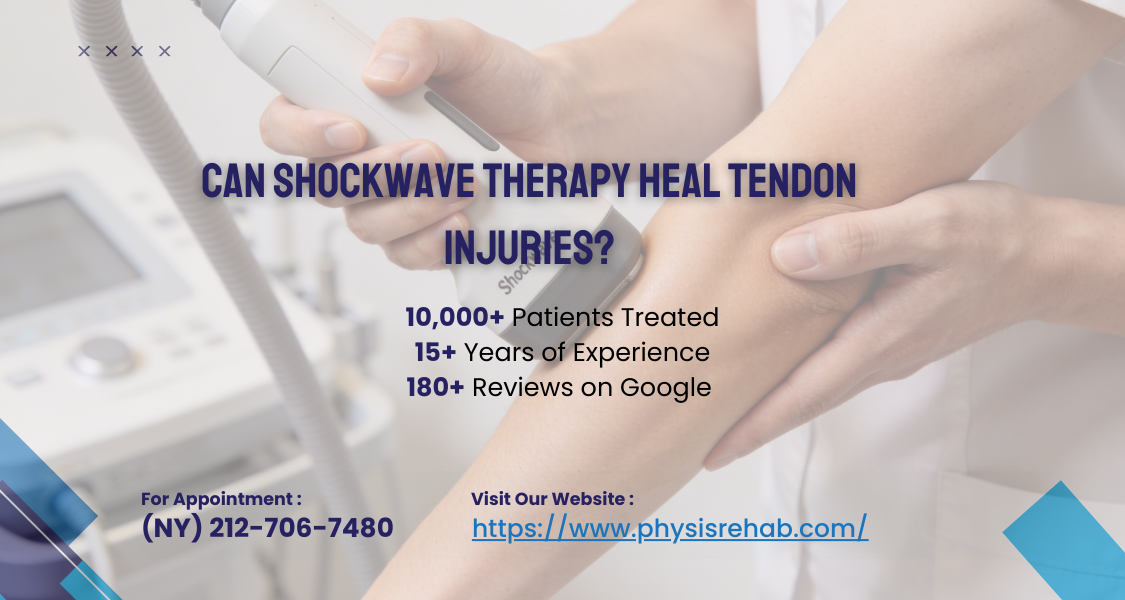
Can Shockwave Therapy Heal Tendon Injuries?
Shockwave therapy for tendons provides a promising solution for people who struggle with stubborn tendon injuries that haven’t responded to standard treatments. A clinical study of 384 patients with tendinopathy showed this non-invasive approach reduced pain and improved functionality by a lot. Patients reported improvements of at least two points on a five-point Likert scale right after treatment and during follow-up evaluations.
The treatment’s appeal lies in its efficiency and minimal recovery needs. Patients typically find long-term relief after just three 15-minute sessions. They need no incisions and can resume activities immediately. Shockwave therapy, also known as extracorporeal shock wave therapy (ESWT), delivers high-energy acoustic waves that trigger healing in damaged tendons. This method boosts neovascularization, which improves blood flow and nutrient delivery to affected areas. The treatment works well for many conditions like Achilles tendinopathy, tennis elbow, rotator cuff issues, and other common tendon injuries.
This piece will help you understand how shockwave therapy heals tendon injuries. We’ll get into the scientific evidence behind its effectiveness and explain what you should expect if you think about this treatment option. You’ll learn everything about this innovative therapeutic approach, whether you have chronic tendonitis or need alternatives for tendon repair.
What is shockwave therapy and how does it work?
Extracorporeal shockwave therapy (ESWT) uses high-energy acoustic waves that pass through the skin. These waves help stimulate healing and reduce pain in injured tissues. Medical professionals first developed this technology to break up kidney stones (lithotripsy) in the early 1980s. Since then, doctors have adapted it to treat many musculoskeletal conditions.
Understanding extracorporeal shockwave therapy (ESWT)
The therapy transmits mechanical energy as acoustic pressure waves to specific tissues. These shockwaves come with unique physical properties. They have high peak pressure (50-80 MPa), rise time that’s very quick (<10 nanoseconds), and last about 10 milliseconds. The waves release energy that triggers cellular responses when they hit tissues of different densities.
Energy flux density (EFD) measures the ESWT dosage by tracking shock wave energy flow through a specific area. Different EFD levels create distinct therapeutic effects. Lower EFDs (below 0.08 mJ/mm²) work best for chronic tendinopathy. Higher EFDs (0.3-0.6 mJ/mm²) might help treat tendon calcifications.
How acoustic waves stimulate healing
ESWT creates therapeutic effects through multiple mechanisms. The mechanical stress starts a process called mechano-transduction that turns physical forces into cellular changes. This process gets more blood flowing through neovascularization and delivers nutrients to injured tendons.
The therapy gets tenocytes to multiply and makes more collagen types I and III – vital components for tendon repair. It also increases growth factors like TGF-β1 and IGF-1 that play key roles in tendon healing. Patients feel less pain because the waves disrupt nerve signals and change inflammatory responses.
Difference between focused and radial shockwaves
Shockwave therapy comes in two main types, each with its own characteristics:
Focused Shockwave Therapy (F-SWT) creates waves inside an applicator. A lens focuses these waves and sends them into deeper tissues. These true shockwaves can reach beyond 10 cm with high energy settings. They hit maximum energy at specific depths based on the device.
Radial Pressure Wave Therapy (R-SWT) works by using compressed air to speed up a projectile. This projectile hits an applicator touching the skin. Radial waves reach their highest energy right at the applicator tip and get weaker as they move through tissue. They can only reach about 3.5 cm deep, which makes them ideal for surface tendons.
Practitioners often use both types together for better results, depending on where the injury is and how deep it goes.
Tendon injuries commonly treated with shockwave therapy
Shockwave therapy works exceptionally well for specific tendon disorders. This makes it a great treatment option for patients with chronic pain. Here are the most common tendon conditions where patients see positive results.
Plantar fasciitis
The thick fibrous band at the bottom of your foot gets inflamed in plantar fasciitis, causing heel pain. This condition responds remarkably well to shockwave therapy. Studies show pain reduction in 91.31% of participants. The treatment works without surgery and helps heal and reduce inflammation in the plantar fascia. Many patients stop needing pain medication after treatment. Most people need 3-6 weekly sessions, though some feel better after just one session.
Achilles tendinopathy
Shockwave therapy helps both insertional and non-insertional Achilles tendinopathy. Research backs its effectiveness when other non-surgical treatments don’t work. A randomized trial showed that 60% of patients felt “completely recovered” or “much improved” after four months. The therapy boosts blood flow to the affected area and helps natural healing. German doctors first developed ESWT for soft-tissue disorders, and now it helps patients avoid surgery.
Tennis and golfer’s elbow
Tennis elbow affects the outer elbow, while golfer’s elbow hits the inner elbow. Both conditions get better with shockwave therapy. One study showed VAS pain scores dropped from 7.25 to 2.76 after treatment. The therapy helps soft-tissue healing and blocks pain receptors through direct healing stimulation and new blood vessel formation.
Rotator cuff tendinopathy
Doctors have used shockwave therapy to treat rotator cuff problems, especially calcific tendonitis, since the 1990s. ESWT works best for calcifications, though results vary for non-calcific tendinopathies. The treatment likely works by overstimulating pain nerve fiber endings and disrupting tendon tissue, which triggers healing responses.
Patellar tendinitis
“Jumper’s knee” or patellar tendinitis causes pain below the kneecap where the tendon connects to the shinbone. Shockwave therapy shows promising results, especially for athletes. Research suggests it works better than rehabilitation alone. One study revealed 90% satisfactory results in the treatment group compared to 50% in the control group.
What the research says about effectiveness
Research shows that shockwave therapy works well to treat stubborn tendon injuries.
Pain reduction and improved function
Clinical studies show major pain reduction across multiple measurement scales. Patients report improvements of 1-2 points on pain scales. A detailed analysis found pain scores dropped from 1.99 to just 0.10 points after treatment. Patients also experience better functionality and quality of life after their therapy sessions.
Clinical trial results for different tendons
The results change based on where the tendon is located. Achilles tendinopathy treatment success rates hit 71.1% right after treatment and climb to 90.3% over time. Rotator cuff treatments make 60.6% of patients completely symptom-free, and another 30.3% see major improvements. The results for gluteal tendinopathy tend to decrease over time – from 83.3% immediate success to 55.6% long-term.
Comparison with traditional treatments
Traditional therapies help reduce pain, but shockwave therapy works better consistently. Studies show it provides longer-lasting benefits than exercise therapy alone and works better than hyaluronic acid injections. Shockwave therapy also speeds up healing when used with standard rehabilitation.
Long-term outcomes and follow-up data
Studies following patients for 3-12 months confirm the lasting benefits. The effectiveness changes based on patient characteristics – younger patients and males usually respond better. Treatment plans using lower energy but more frequent sessions often lead to better long-term results.
What to expect during and after treatment
Understanding shockwave therapy helps you prepare better and get the best results from your treatment. Let’s look at what happens before, during, and after your session.
How a typical session works
Your therapist will first find the painful area by touch. They will apply a special conductive gel to your skin that helps transmit acoustic waves. A handheld device delivers rhythmic pulses against your skin. Your comfort level determines the intensity adjustments, with most patients aiming for “5 out of 10” on the pain scale. Most people don’t find it painful – you might feel tapping, warmth, pressure, or fluttering sensations as shockwaves reach deep into your tissue.
Treatment duration and frequency
Shockwave therapy sessions take 5-30 minutes, though most wrap up within 10-15 minutes. Tendon injuries usually need 3-6 weekly sessions. This schedule gives your body enough time to recover between treatments. Some stubborn cases might need up to 12 sessions, depending on your condition and how your body responds.
Side effects and recovery time
After your treatment, you might experience:
- Mild soreness lasting 24-48 hours
- Temporary redness or swelling in the treated area
- Minor bruising or numbness
- Brief stiffness in the treated region
These reactions show that your healing process has started. You should avoid strenuous activities for 24-48 hours after treatment, but light daily activities are fine. Deeper conditions might need up to 72 hours of rest.
When to expect results
Pain often reduces right after your first session. Notwithstanding that, complete recovery takes time—clinical benefits typically show up within 3-12 weeks. Your body needs time to repair naturally. Healing continues gradually, and improvements can continue for months. Some patients experience lasting benefits for up to two years.
Key Takeaways
Shockwave therapy offers a proven, non-invasive solution for chronic tendon injuries that haven’t responded to traditional treatments, with research showing significant pain reduction and improved function.
• High success rates with minimal time investment: Most patients achieve long-term relief after just 3-6 brief sessions lasting 10-15 minutes each, with no surgery or extended downtime required.
• Scientifically proven effectiveness: Clinical studies show 71-90% success rates for various tendon conditions, with shockwave therapy consistently outperforming conventional treatments like exercise alone.
• Versatile treatment for common injuries: Effectively treats plantar fasciitis, Achilles tendinopathy, tennis elbow, rotator cuff issues, and patellar tendinitis through acoustic waves that stimulate healing.
• Gradual but lasting results: While some patients experience immediate relief, full recovery typically develops over 3-12 weeks with benefits potentially lasting up to two years.
• Minimal side effects with manageable recovery: Expect only mild soreness for 24-48 hours post-treatment, with light daily activities permitted and strenuous exercise avoided briefly.
This innovative therapy works by delivering high-energy acoustic waves that promote blood flow, stimulate collagen production, and trigger natural healing responses in damaged tendons, making it an excellent option for those seeking alternatives to invasive procedures.
Conclusion
Shockwave therapy emerges as a game-changing solution for stubborn tendon injuries that don’t respond to standard treatments. This piece shows how acoustic waves work their magic – they boost healing in damaged tendons, enhance blood flow, and cut down pain substantially.
Most people feel better after just three to six quick sessions. The best part? No cuts or long recovery times needed. The therapy works great with plantar fascitis, Achilles tendinopathy, tennis elbow, rotator cuff problems, and patellar tendinitis.
Research data definitely backs up these healing benefits. Studies reveal clear improvements in pain levels and how well people can move. The results last longer than traditional treatments, and patients heal faster when they combine it with regular rehab.
Your body might feel sore for a day or two after treatment, but patients say the results make it worthwhile. Some notice changes right away, though full healing takes 3-12 weeks as your body repairs the damaged tissue naturally.
Talk to your doctor about whether focused or radial shockwaves would suit your condition better. The choice depends on where your injury sits and how deep it goes. This treatment brings real hope to people who still hurt despite trying other options.
Frequently Asked Questions
Shockwave therapy has shown significant effectiveness in treating various tendon injuries. Clinical studies demonstrate pain reduction and improved functionality in conditions like plantar fasciitis, Achilles tendinopathy, and tennis elbow. Many patients experience relief after just a few sessions, with long-term benefits lasting up to two years in some cases.
Most patients require 3-6 sessions of shockwave therapy, usually administered at weekly intervals. The exact number of sessions depends on the specific condition and individual response to treatment. Some stubborn cases may need up to 12 sessions for optimal results.
During a session, a therapist applies a conductive gel to the affected area and uses a handheld device to deliver acoustic waves. The treatment usually lasts 5-30 minutes, with most sessions completed within 10-15 minutes. Patients may feel a tapping, warmth, or pressure sensation, which is typically described as mildly uncomfortable rather than painful.
After treatment, you may experience mild soreness, temporary redness, swelling, or minor bruising in the treated area for 24-48 hours. These are normal signs that the healing process has begun. It’s recommended to avoid strenuous activities for 24-48 hours following treatment, though light daily activities are generally fine.
While some patients report immediate pain reduction after their first session, full recovery isn’t instantaneous. Clinical benefits typically develop within 3-12 weeks as the body naturally repairs the damaged tissue. Improvements may continue for months, with lasting benefits persisting up to two years in some cases.